
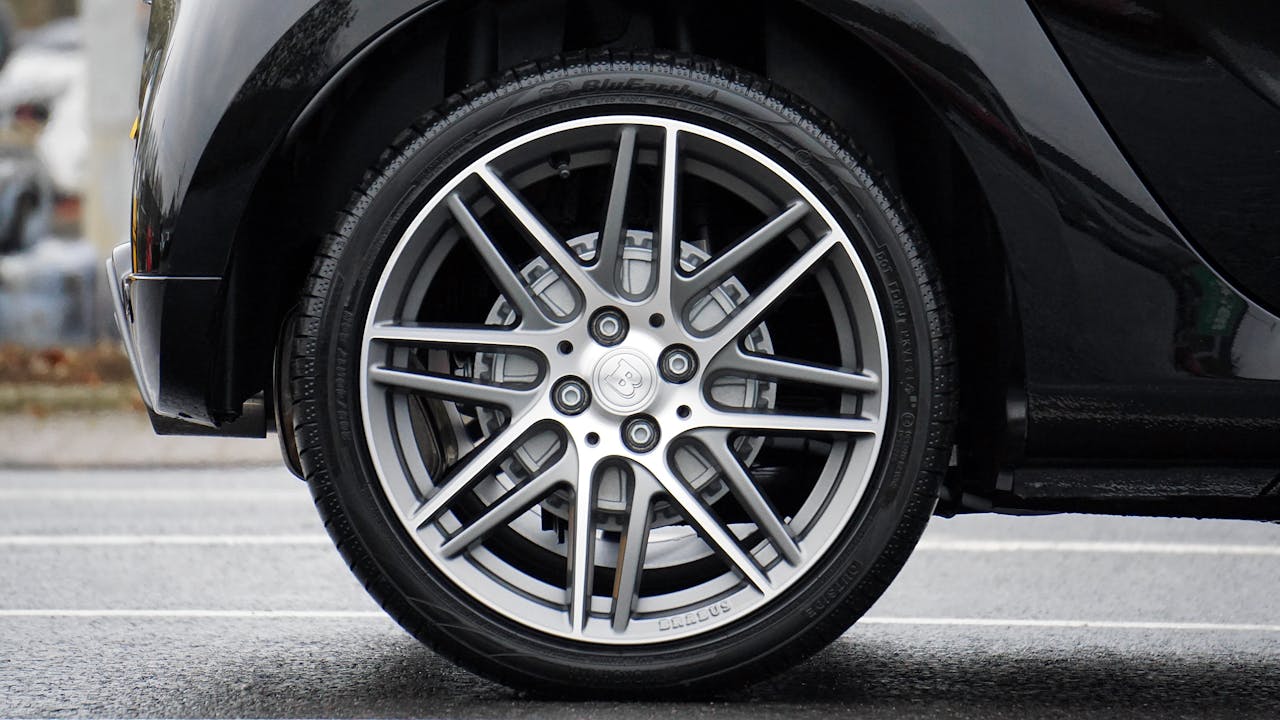
CBR Driving Test: What you need to know about tires (important for your exam)!
Whether you are just beginning to drive or have been on the road for years, one thing is certain: your car's tires are crucial to your safety and the safety of others. Well-maintained tires not only provide optimum grip and shorter braking distances, but also contribute to lower fuel consumption and longer life of your car. Did you know that your examiner may ask specific questions about this during your practical exam? So knowing about your tires is not only useful, but essential!
Let's take a closer look at the most important aspects of car tires:
1. The Right Tire Pressure: Your Grip on the Road
Proper tire pressure is fundamental to your car's performance.
- Check monthly: Be sure to check tire pressure at least once a month, and don't forget your spare tire (if any).
- Where do you find the right tension? The recommended tire pressure is usually listed on the door pillar, on the inside of the fuel valve or in your car's instruction booklet.
What happens when tire pressure deviates?
- Tire pressure too low:
-
- ❌ Unsafe: The tire deforms too much, resulting in poor handling, especially in corners and during braking.
- ❌ More wear and tear: The sides of the tire wear off faster.
- ❌ Higher fuel consumption: Greater rolling resistance causes your car to consume more fuel.
- ⚠️ Dangerous: A tire that is too soft can overheat and in the worst case cause a blowout.
-
- Excessive tire pressure:
-
- ❌ The tire becomes more “convex,” reducing the contact area with the road.
- ❌ The car feels “bouncy” and has less grip.
- ❌ More wear and tear: The center of the tread wears off faster.
-
2. Profile depth and Wear Indicator: Get rid of Aquaplaning!
A tire's tread is essential to shed water to maintain grip, especially on wet roads.
- Risks of insufficient profile:
-
- ❌ More likely to aquaplaning (losing contact with the road surface due to a layer of water).
- ❌ A significant longer braking distance on wet roads.
-
Legal standards and opinions:
- Legal minimum: A legal minimum of 1.6 mm tread depth.
- Winter tire recommendation: Winter tires lose much of their grip at less than 4 mm profile. Therefore, the advice is to replace winter tires well before the tread reaches the wear indicator to ensure optimal safety.
- The Tread Wear Indicator (TWI): These are small rubber cubes placed between the main grooves of the tread. If the tread of the tire is as high as these blocks, it means the tire has reached the legal minimum and must be replaced. For winter tires, the TWI is also 1.6 mm, but for maximum performance and safety on snow and ice, it is wise to replace them as early as about 4 mm. The TWI is thus a latest warning, don't wait for it to be visible!
3. Valve and Valve Cap: The Little Protectors
These small parts play a bigger role than you might think:
- The valve: Ensures the air stays in the tire.
- The valve cap: Protects the valve from dirt and moisture, and helps prevent small leaks. Make sure the caps are tight!
4. Checking for Damage: A Visual Inspection
Take regular time to visually check your tires. Park the car safely for this purpose (handbrake on!).
- Tears or cuts: These can lead to a flat tire.
- Blisters or bumps: This indicates a damaged carcass (the internal structure of the tire). A tire with a bladder should be replaced immediately!
- Irregular wear: This may indicate misalignment of the wheels or improper tire pressure.
- Check all sides: Remember to properly inspect the inside and outside of the tire.
Regularly checking your tires is not a luxury, but an absolute necessity for your safety and that of your fellow road users. Make it a habit to check your tires every month. Not only will you prevent dangerous situations, but you will also save on fuel and maintenance costs. Safe miles wished!


